
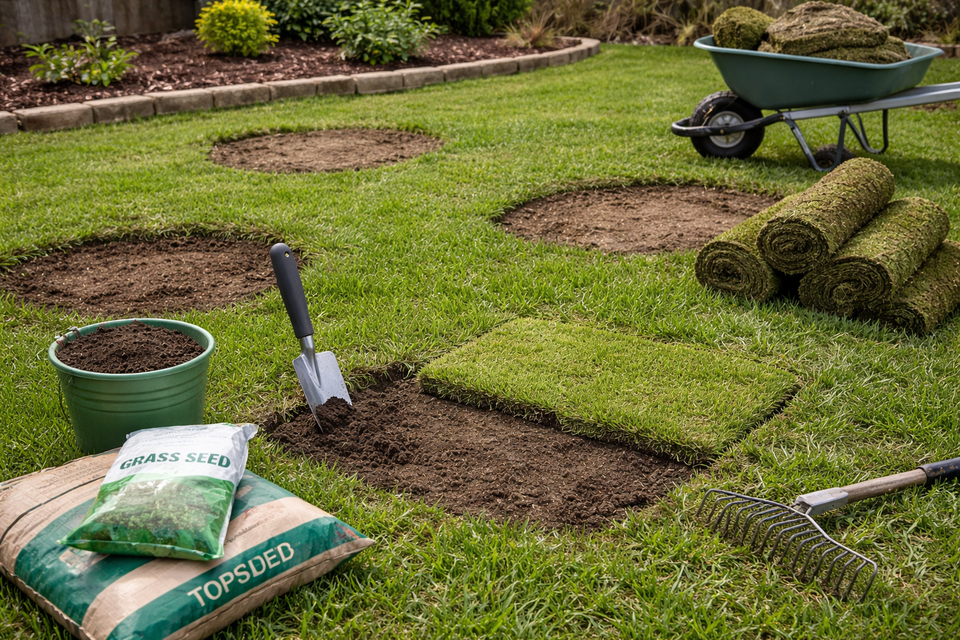
Bare Spots After Winter: Patch Them, Repair Them, or Replace Them With Sod?
Bare spots after winter are common, but they do not all call for the same fix. Some are minor and can recover with the right attention. Others point to a deeper issue that will keep coming back until the real cause is addressed.
That is where many homeowners lose time. They see an empty patch in the lawn and assume it just needs fertilizer or a little water. Sometimes the issue runs deeper than that. The question is not only how the grass looks right now. The question is what caused it to open up in the first place.
Why Bare Spots Show Up After Winter
A lawn can come out of winter with weak or open areas for several reasons. In some cases, the turf was already struggling before colder weather ever arrived. Winter just made the damage easier to see.
Common causes include:
- Foot traffic in the same area again and again
- Compacted soil that limits healthy root growth
- Poor drainage or standing water
- Thin turf that never fully filled in
- Disease or stress from the previous season
- Mowing damage from cutting too much off at one time
When the lawn greens up unevenly in spring, those weak areas become easier to spot.
When a Spot Can Be Patched
Some bare spots are small enough to patch and monitor. That usually works best when the surrounding lawn is still healthy and the damaged area is limited.
A patch may make sense when:
- The bare spot is relatively small
- The grass around it is strong and actively growing
- The area is not holding too much water
- The problem does not keep returning in the same place
- The surrounding turf is capable of spreading back in
In those situations, the goal is not just covering the area. The goal is helping the lawn recover without turning a small problem into a larger one.
When the Lawn Needs More Than a Patch
Sometimes a bare spot is only the surface sign of a bigger issue. If the soil underneath is packed hard, if water keeps settling there, or if the turf around it is weak and thinning, a patch alone may not hold.
That is when the lawn may need repair.
Repair usually becomes the better approach when:
- The same area keeps failing
- The soil feels hard and compacted
- Water pools or drains poorly
- Weeds keep taking over the spot
- The turf around the area is also thinning
- The damaged section is larger than it first appeared
A lawn like that often needs the underlying problem corrected before it will truly recover.