Before You Fertilize: What Your Lawn May Actually Need First
April 7, 2026
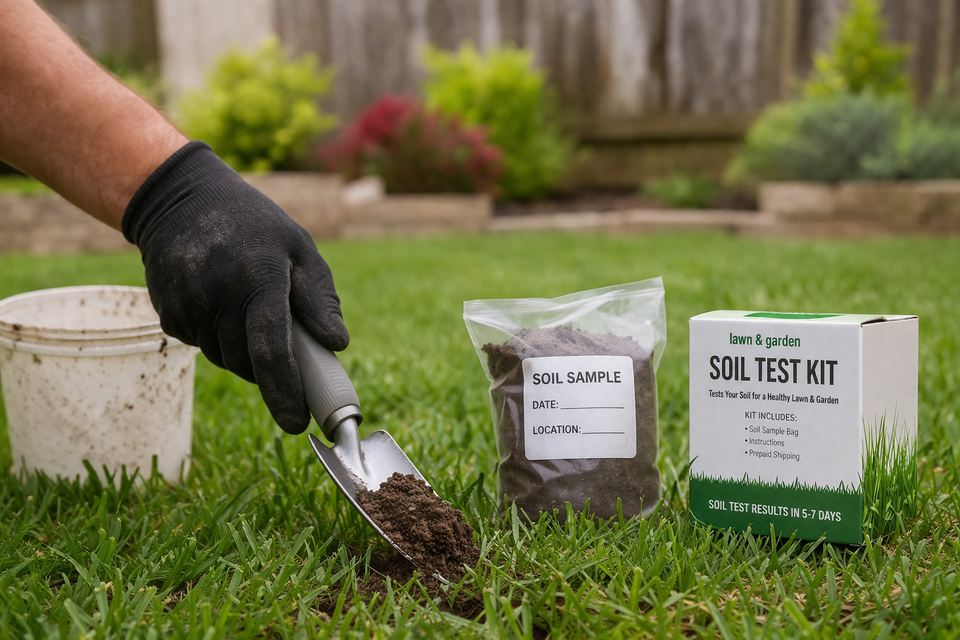
When a lawn starts waking up in spring, many homeowners think the first answer is fertilizer. Sometimes it is. A lot of times it is not. In east-central Georgia, a lawn may be dealing with pH issues, thin turf, bare spots, drainage trouble, or leftover winter stress, and fertilizer alone will not fix those problems. UGA’s soil testing program says soil sampling should be done well ahead of spring green-up, and for lawns the sample should be taken at a depth of about 4 inches so the recommendations actually match what the turf needs.
A soil test is one of the smartest first steps because it helps show whether the lawn needs lime, nutrients, or neither one yet. UGA notes that soil testing helps prevent applying too much or too little fertilizer, which can waste money, hurt growth, and contribute to runoff. That matters even more when a yard already has weak areas, because throwing product at the whole lawn often treats the symptom instead of the cause.
Timing matters too. For Georgia warm-season lawns, UGA says not to apply nitrogen in spring until the soil temperature at the 4-inch depth is consistently 65°F and rising. That is a big reason many lawns should be evaluated first instead of rushed into an early feeding. And if the lawn is centipede, caution matters even more, because UGA specifically warns that over-fertilization is one of the leading causes of decline and poor performance in centipede lawns.
So what might your lawn need before fertilizer? It may need a proper cleanup so sunlight and airflow can reach the turf again. It may need bare spots repaired instead of fed. It may need mulch refreshed around beds so the whole property looks cleaner while the grass catches up. It may need irrigation checked so one area is not staying soggy while another is drying out. And in some yards, the smartest move is simply finding out what the soil is saying before spending money on products that may not be needed yet. That kind of step-by-step approach fits the services Risen Savior Lawn Care already provides, including soil analysis, sod installation, mulching, and irrigation system work.
A practical way to think about April is this: if the lawn is pale, uneven, or slow to respond, do not assume fertilizer is the whole answer. Check the basics first. Look at the soil. Look at the weak spots. Look at water coverage. Look at whether the grass type you have should even be pushed yet. A better diagnosis now can save time, money, and frustration later in the season. UGA’s lawn calendars are built around exactly that kind of measured timing, with fertilizer, aeration, and other work lining up with actual turf conditions rather than guesswork.
If your yard is in Dearing, Thomson, Harlem, or nearby communities around McDuffie County, this is a good time to take a closer look before jumping straight to fertilizer. Risen Savior Lawn Care can help evaluate what the lawn may actually need first, whether that turns out to be soil analysis, spot repair, sod work, mulching, irrigation attention, or a broader maintenance plan for the season ahead.