
Why Some Lawns Green Up Unevenly in Spring and What to Do Next
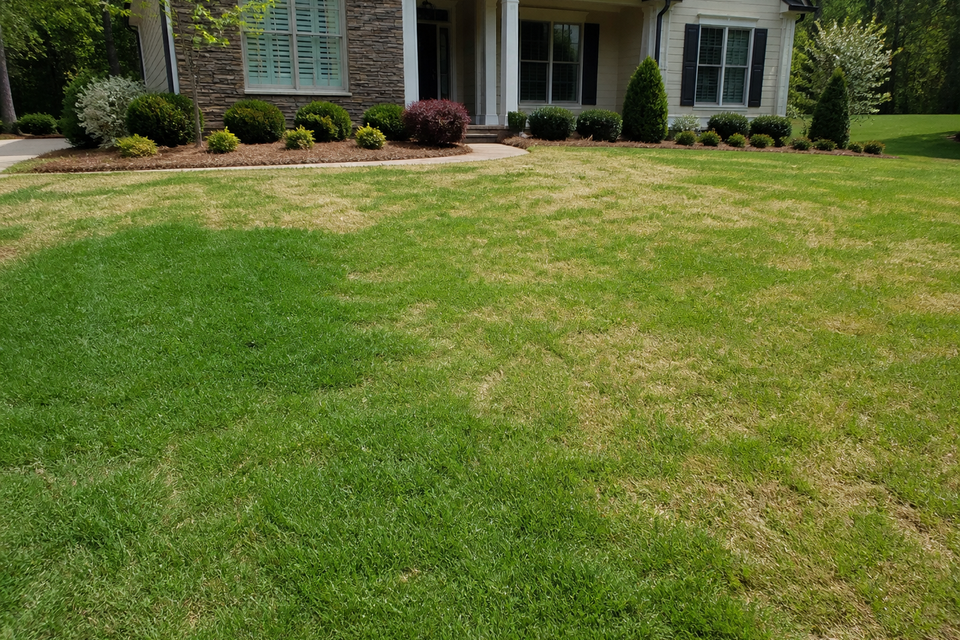
When one part of a lawn starts turning green while another part stays pale, patchy, or brown, homeowners usually assume the whole yard just needs fertilizer. Sometimes that is not the real issue. In Georgia, uneven spring green-up can happen for several different reasons, including cold injury, disease activity, delayed recovery from stress, and the natural behavior of certain warm-season grasses during temperature swings. UGA notes that cold injury can damage turf roots and crowns so affected areas fail to green up, and it also notes that centipedegrass in particular can begin growing and then turn yellow after a mid- to late-spring cold snap as soil temperatures fluctuate.
Not Every Slow Area Means the Same Thing
Uneven green-up matters because the pattern often tells the story. If the lawn looks broadly pale and slow across large areas, that may point to stress, delayed recovery, or a turf-type issue. If the lawn has distinct circles or sharply defined patches that stay brown while the rest greens up, UGA says that is more likely to indicate a disease problem such as large patch or spring dead spot. Spring dead spot is especially tied to bermudagrass, while large patch is a major spring concern in warm-season grasses across Georgia.
Common Reasons a Lawn Greens Up Unevenly in Spring
A lawn may green up unevenly because of one cause or several working together. The most common spring causes include:
- cold injury after freezing temperatures
- large patch disease during spring transition
- spring dead spot in bermudagrass
- temperature swings affecting centipedegrass green-up
- poor drainage that keeps the lawn too wet
- soil compaction that limits root recovery
- leftover stress from the previous season
- areas of the yard that simply recover slower than others