Skip to content
9fd160ee f8bf 4fbf a66f 54aae700d07f

Why Your Lawn Still Looks Thin Even Though It’s Turning Green

A lawn can start turning green in spring and still not be in great shape. Color coming back is a good sign, but it does not always mean the turf is thick, full, or recovering evenly. In practical terms, green-up and density are not the same thing. University of Georgia turf specialist Clint Waltz notes that proper mowing height affects canopy density, root depth, and volume, while thin, weak turf in compacted areas often needs help below the surface, not just a greener color on top.


Green Does Not Always Mean Full


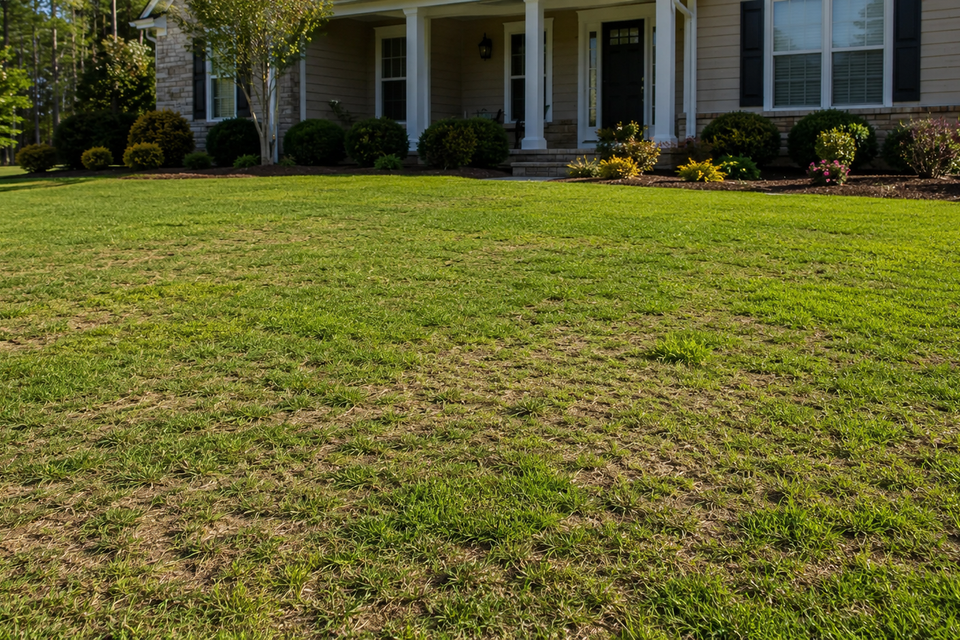
A lawn may look greener from a distance while still being open, sparse, or weak up close. That is often why homeowners feel confused in May. The yard looks like it is waking up, but it still does not look thick, finished, or healthy the way they expected. A thin stand of turf can stay that way when growth is being limited by compaction, traffic, or mowing habits that reduce density instead of building it.
 

Common Reasons a Lawn Looks Thin Even While It Greens Up


Some of the most common reasons include:
 
  • the lawn is alive, but still recovering slowly
  • mowing height has been too low for the grass type
  • too much grass has been removed at one time
  • foot traffic has compacted the soil
  • the root system is not strong enough yet to support fuller growth
  • some areas are simply lagging behind the rest of the yard

UGA guidance, as quoted by Waltz, ties proper mowing height directly to stronger canopy density and deeper roots, while compaction guidance notes that a thin, weak stand of turf is often one of the clearest signs the lawn is struggling below the surface.
 

Why Mowing Habits Matter Here


One of the easiest ways to keep a lawn thin is to cut it too short or let it get too tall and then remove too much at once. When that happens, the grass may still regain color, but it does not always gain the fullness homeowners want. Proper mowing height helps the lawn build density. Poor mowing habits can do the opposite. Waltz specifically says mowing at the proper height helps optimize canopy density and gives the turf a better root system to handle drought and other stress.

Request a Free Estimate Back to Menu

Why Compaction Can Keep a Lawn Looking Sparse

 
Thin green turf often points to a root problem, not just a color problem. When soil is hard-packed from traffic, equipment, or repeated use, roots have a harder time pushing through the soil profile. Water, oxygen, and nutrients also move less freely. That is why a lawn can be alive enough to turn green, but still not be vigorous enough to fill in well. Turf guidance on aeration describes compaction as a root-level problem that can leave the lawn thin and struggling even when the grass is technically growing.
 

What To Do Next

 
If the lawn is green but still thin, the next move should be based on what is holding it back.

A better next step may include:

 
  • checking whether mowing height is correct for the turf
  • getting back on a more consistent mowing schedule
  • looking at high-traffic areas for compaction
  • improving conditions that support stronger root growth
  • evaluating whether the lawn needs topdressing, aeration, or a broader recovery plan
  • deciding whether weak areas need time to fill in or stronger corrective work
 
This is where a practical article can also support conversions. Risen Savior Lawn Care already offers services that fit this exact kind of problem, including Weekly Maintenance, Biweekly Maintenance, Monthly Maintenance, Soil Analysis, Topdressing, Seasonal Aeration, Sod Installation, and Irrigation Systems.
 

Why Waiting Can Turn a Thin Lawn Into a Bigger Problem

 
A thin lawn does not just look less full. It also has a harder time crowding out weeds and dealing with heat stress as the season moves forward. Waltz notes that a denser lawn makes it harder for weed seeds to take hold, which is one reason proper mowing and stronger turf density matter early in the season instead of waiting until summer problems are already showing.
 

Local Help Around Warrenton


For homeowners around Warrenton and nearby communities, this is a good time to pay attention if the lawn is regaining color but still looks sparse. Warrenton is in neighboring Warren County, west of Dearing, and it fits naturally into the broader local service area this content is targeting. If the yard is greener than it was a few weeks ago but still looks thin, open, or weak, this may be the right time to correct what is limiting real recovery before hotter weather arrives.

View Our Services Back to Menu

Thin Green Lawn in Warrenton, GA
Questions & Answers

Helpful answers for homeowners trying to figure out why the lawn is turning green but still does not look full.

A lawn can regain color before it regains thickness. That usually means the grass is alive, but the turf still lacks the density or root strength needed to look fuller.

Not always. Green-up is a positive sign, but it does not always mean the lawn has recovered from thinning, weak roots, mowing stress, or compaction.

Yes. If the lawn is cut too short or too much is removed at one time, the grass may stay greener than winter but still not build the fullness homeowners want.

Yes. Hard-packed soil can limit root growth and make it harder for the lawn to thicken up, even when the grass is technically growing again.

The best next step is to look at mowing habits, traffic patterns, soil conditions, and whether the lawn needs help through aeration, topdressing, or a more consistent maintenance plan.

Not always. If the problem is really weak density, shallow roots, or compacted soil, fertilizer by itself may not solve what is keeping the lawn sparse.

Risen Savior Lawn Care helps homeowners around Warrenton and nearby communities with maintenance, topdressing, seasonal aeration, sod installation, irrigation systems, and other services that support stronger lawn recovery.