
What to Do About Leaves Before They Smother Your Lawn
A few colorful leaves scattered across the yard are part of fall. A heavy, wet layer sitting on the turf for days or weeks is something different. Leaves can block sunlight, trap moisture, hide disease problems, and weaken grass underneath if they are allowed to pile up.
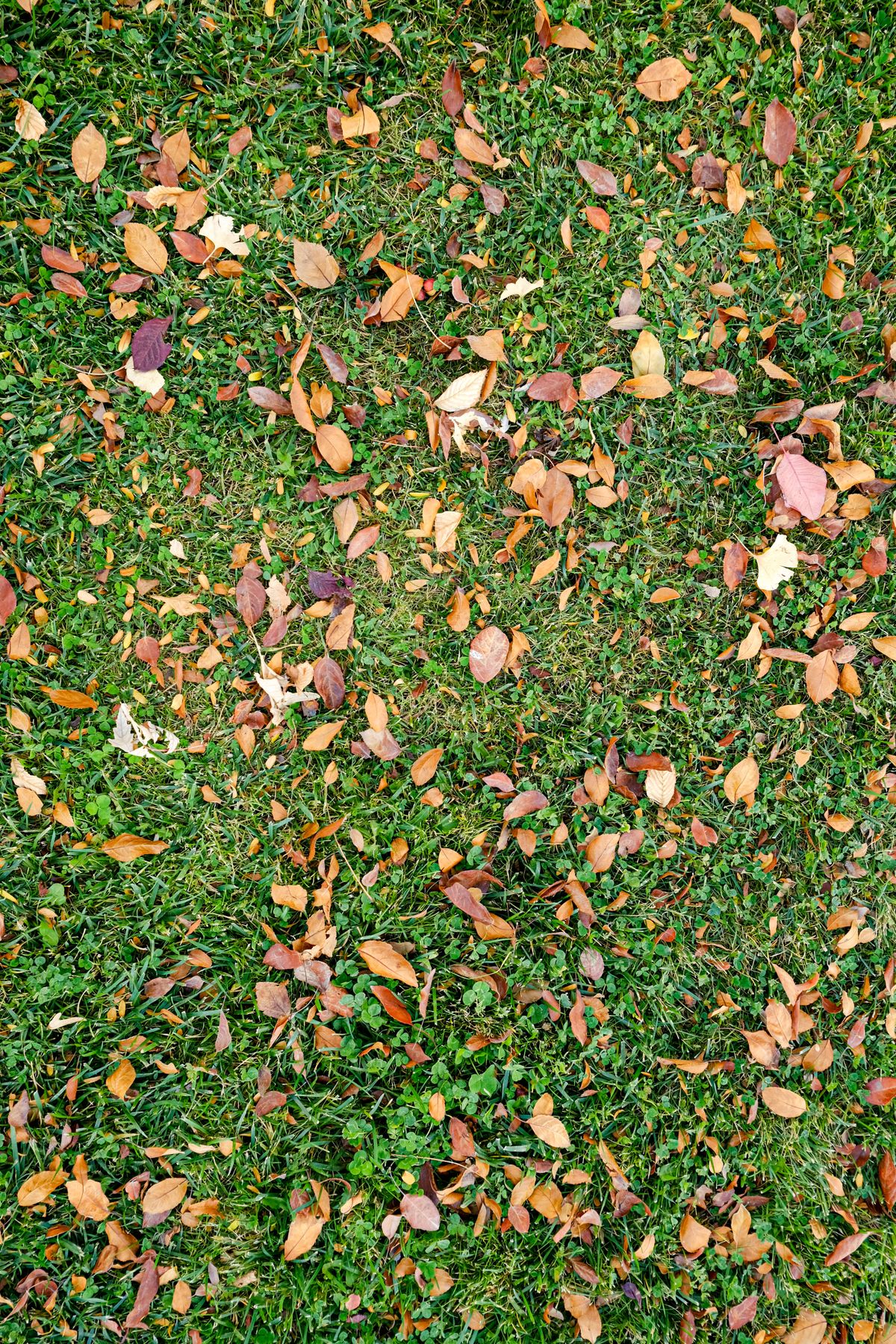
The Problem Is Not One Leaf — It Is the Layer
Grass still needs light and air as the growing season winds down.
A scattered layer of dry leaves usually does little harm. The concern begins when repeated leaf drop creates a thick mat that stays wet, blocks sunlight, and physically covers the turf.
UGA Extension specifically recommends removing accumulated leaves, pine needles, thatch, and similar material so the lawn is not deprived of sunlight or held under excessive moisture. :contentReference[oaicite:1]{index=1}
Why Wet Leaves Cause More Trouble
Dry leaves can move around and allow some air through them. Once they become wet, they tend to flatten and stick together.
That creates a heavier mat over the grass and can extend the amount of time moisture remains against the turf canopy.
The longer that layer remains, the less favorable the environment becomes for healthy turf beneath it.
You Do Not Necessarily Have to Bag Every Leaf
Leaves are organic material, and there can be useful ways to keep them on the property without leaving them in a heavy layer over the lawn.
UGA Extension recommends shredding leaves before using them around trees, shrubs, and flowers because shredded material stays in place better and can act as mulch. :contentReference[oaicite:2]{index=2}
That can turn some of fall cleanup from a disposal problem into useful landscape material.
Large whole leaves can blow around and form heavy mats. UGA recommends shredding leaves with a mower, bagging attachment, or leaf shredder before using them as mulch around landscape plants. :contentReference[oaicite:3]{index=3}
Three Reasons Regular Leaf Cleanup Helps the Lawn
Fall cleanup is not only about appearance. It helps keep the turf exposed to the conditions it still needs heading into dormancy.
More Light
Removing heavy leaf cover allows sunlight to continue reaching the grass instead of being blocked by a dense layer.
Less Trapped Moisture
Clearing matted leaves helps prevent prolonged dampness from sitting directly against the turf canopy.
Better Visibility
A clear lawn makes it easier to spot disease patterns, thinning turf, low areas, and other problems before winter.
Can You Mulch Leaves Into the Lawn?
Sometimes, yes.
The key is whether the mower reduces the leaves into small enough pieces that they settle into the turf instead of leaving a continuous blanket on top.
If the lawn still looks covered afterward, the volume is probably too high for mowing alone to solve the problem efficiently.
When Raking or Blowing Makes More Sense
Large trees can drop more material than a mower can reasonably process at one time.
When leaves are several layers deep, wet, or clumped into corners of the yard, removing them from the turf is usually the better choice.
The same applies to pine needles and other debris that accumulates heavily enough to shade the grass.
Do Not Forget Drainage Areas
Leaves do not only land on lawns. They also collect around storm drains, downspouts, swales, ditches, and low areas.
Large leaf accumulations in those locations can interfere with water movement and contribute to localized ponding during fall storms.
If heavy rain has already exposed drainage trouble on the property, read What Heavy Rain and Storms Can Do to a Yard and What to Fix First .
Leaves Can Hide Lawn Disease
Thick leaf cover can make it harder to see what is happening to the turf.
When leaves are removed, circular patches, thinning, or unusual turf discoloration may become visible.
If you uncover strange patterns, see Early Signs of Lawn Disease Homeowners Should Not Ignore .
Keep Mowing While the Lawn Is Still Growing
Leaf season often begins before warm-season turf has completely stopped growing.
UGA Extension notes that warm-season turf may continue growing until hard freezes arrive, so regular mowing and leaf management can overlap for part of the fall. :contentReference[oaicite:4]{index=4}
That makes mower-based leaf shredding especially practical while leaf volume is still manageable.
Do Not Let Cleanup Damage Soft Ground
A rainy fall can leave soil soft enough that repeated mowing, blowing equipment, or heavy traffic creates ruts and compaction.
If the ground is saturated, it may be smarter to wait until the surface firms up rather than damaging the lawn while trying to clean it.
Fall Cleanup Can Help You See What Needs Attention Next
Once leaves are removed, the lawn becomes easier to evaluate.
Thin turf, compaction, bare spots, irrigation gaps, and drainage trouble stand out much more clearly when they are not hidden beneath seasonal debris.
If fall cleanup reveals damaged areas, read Why Fall Is a Great Time to Repair Thin or Damaged Landscape Areas .
Think of Leaf Removal as Ongoing Maintenance
You do not have to wait for the final leaf to fall.
UGA notes that leaves can be removed gradually throughout fall or handled later in larger batches. Either approach can work as long as the end goal is preventing a heavy layer from remaining on the turf long enough to cause damage. :contentReference[oaicite:5]{index=5}
Need Help Keeping Fall Leaves From Taking Over the Property?
Risen Savior Lawn Care provides lawn maintenance, seasonal cleanup, mowing, edging, trimming, landscape-bed upkeep, mulching, and other services that can help keep your property clean and cared for through fall.
Call (706) 449-7801 Request a Free EstimateFall Leaf Cleanup Around Dearing, Georgia
Properties throughout Dearing, Thomson, Harlem, Boneville, Camak, Warrenton, Grovetown, and nearby communities can accumulate significant leaf and pine-needle cover as deciduous trees transition into fall.
Risen Savior Lawn Care helps homeowners keep lawns, walkways, landscape beds, and other property areas maintained while seasonal debris continues falling.
For the broader fall preparation checklist, read The Fall Lawn Tasks Smart Homeowners Start Planning Before Cooler Weather .
If the lawn has begun slowing toward dormancy, continue with What Your Lawn Is Telling You Before Fall Dormancy Begins .
Fall Leaf Cleanup Questions & Answers
Leaves are natural and useful organic material, but leaving too many on the lawn can create unnecessary turf problems.
Can fallen leaves actually kill grass?
A heavy layer can. UGA Extension warns that accumulated leaves and other debris can block sunlight and trap moisture, weakening or killing turf beneath them. :contentReference[oaicite:6]{index=6}
Do I need to rake every leaf off my lawn?
No. Light leaf cover can often be shredded with a mower. The goal is preventing a thick continuous layer from remaining over the turf.
Can I mow over leaves instead of bagging them?
Yes, when the leaf volume is manageable. The mower should chop the leaves finely enough that the turf remains visible rather than buried.
Can I use fallen leaves as mulch?
Yes. UGA recommends shredding leaves first and then using them around trees, shrubs, and flowers as organic mulch. :contentReference[oaicite:7]{index=7}
Why are wet leaves worse for grass?
Wet leaves tend to mat together, creating a heavier layer that blocks more light and keeps moisture trapped against the turf.
Should I keep mowing during leaf season?
Continue mowing warm-season turf while it is still actively growing. UGA notes that growth can continue until harder freezes push the grass fully into dormancy. :contentReference[oaicite:8]{index=8}
Can leaves cause lawn disease?
Leaves do not automatically cause disease, but thick cover can trap moisture and reduce sunlight and airflow, creating less favorable turf conditions and potentially increasing disease pressure.
Does Risen Savior Lawn Care offer fall cleanup?
Yes. Risen Savior Lawn Care provides seasonal cleanup along with lawn maintenance, mowing, edging, trimming, landscape-bed upkeep, mulching, and other property services. Call (706) 449-7801 to request a free estimate.
Helpful Georgia Lawn Resources
University of Georgia Extension recommends removing leaves, pine needles, thatch, and other accumulated material that blocks sunlight and traps moisture over turf. UGA also notes that shredded leaves can be reused as mulch around landscape plants. :contentReference[oaicite:9]{index=9}