Early Signs of Lawn Disease Homeowners Should Not Ignore
A few yellow blades or one thin area do not automatically mean a lawn has disease. But when patches begin spreading, individual blades develop unusual spots, or healthy turf starts collapsing for no obvious reason, it is worth paying closer attention.
One of the Biggest Clues Is a Patch That Keeps Spreading
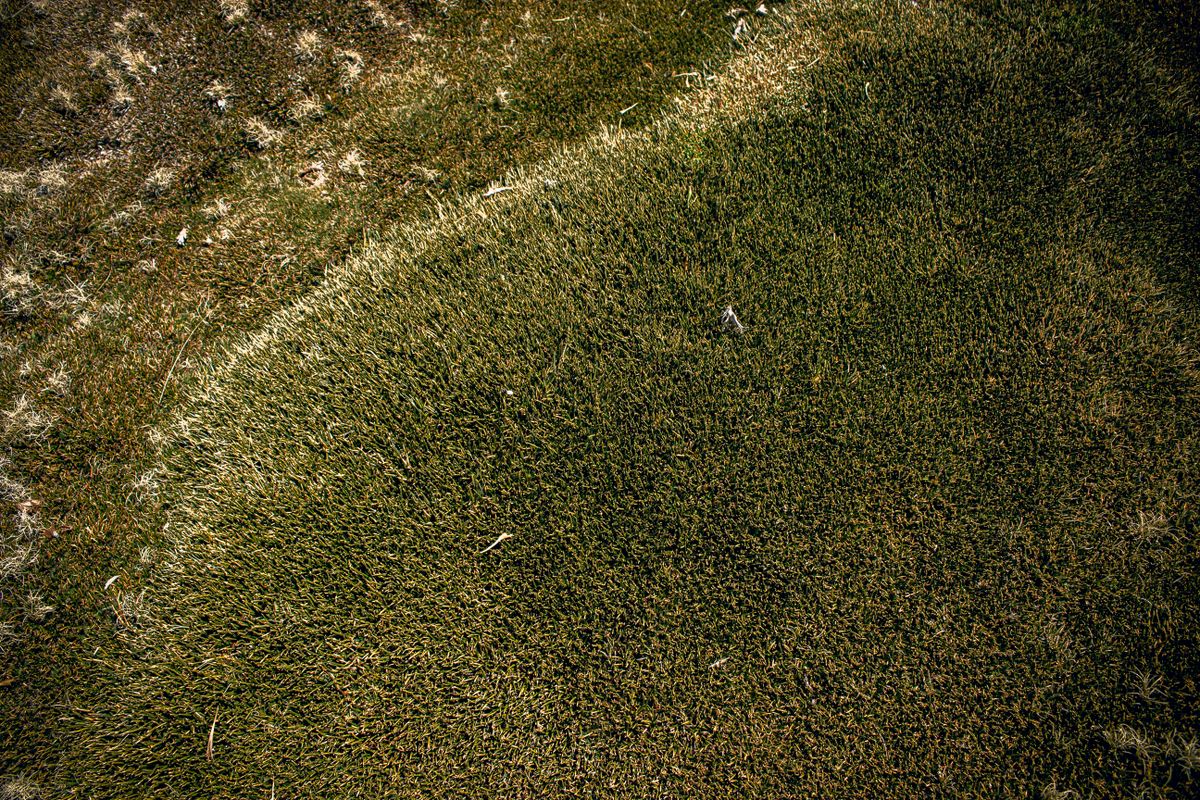
Lawn problems caused by disease often develop in recognizable patterns. Circular patches, irregular expanding areas, rings, or multiple spots that begin joining together deserve a closer look.
UGA Extension notes that biological turf diseases can spread progressively, with brown or yellowing patches enlarging and sometimes merging over time. Environmental problems, by contrast, may appear suddenly or follow a particular physical feature of the property.
That does not make pattern alone a diagnosis, but it can provide a useful first clue.
Circular or Expanding Brown Patches
Brown patch and other turf diseases can develop as circular or irregular areas that increase in size under favorable conditions.
Spots or Lesions on Individual Blades
Look closely. Some diseases create distinct tan, brown, gray, or discolored lesions rather than simply turning the entire blade brown.
Grass Begins Thinning Rapidly
Disease can sometimes cause turf density to decline much faster than normal seasonal thinning or ordinary wear.
Unusual Growth Visible in the Morning
Under certain conditions, fungal growth or webbing may be visible on affected turf early in the morning while dew is still present.
Brown Patch Can Affect Georgia Lawns
Brown patch is caused by fungi in the Rhizoctonia group and can infect both warm- and cool-season turfgrasses.
UGA describes symptoms as circular patches of blighted turf ranging from inches to several feet across. Depending on the grass species, affected areas may appear brown or straw-colored.
Individual leaves can also show irregular spots, while badly affected blades may deteriorate and pull away more easily.
UGA identifies high humidity, excess soil moisture, prolonged leaf wetness, and in some cases excessive nitrogen as conditions that can favor turf disease development.
Leaf Spots Can Be Easier to See Than You Think
When a lawn starts looking discolored, get close enough to inspect individual blades.
Gray leaf spot, for example, can begin as small brown spots that enlarge and develop gray or tan centers with darker margins. Severe infections can cause affected turf to become noticeably thin.
Other turf diseases produce different lesion shapes and colors, which is why examining the blade itself can help distinguish disease from simple drought stress.
Three Conditions That Can Make Disease Problems Worse
Disease usually develops from a combination of a susceptible grass, a disease-causing organism, and environmental conditions that allow the problem to develop.
Extended Leaf Wetness
Water sitting on the turf canopy for long periods can create a more favorable environment for several fungal diseases.
Poor Drainage
Continually wet soil and areas that remain soggy after rainfall can increase stress and contribute to conditions favorable for disease.
Excessive Nitrogen
Some turf diseases become more severe when the lawn receives more nitrogen than conditions justify.
Overwatering Can Create the Conditions Disease Likes
One of the easiest mistakes is treating every weak-looking lawn as if it simply needs more water.
UGA identifies excessive soil moisture and extended leaf wetness as factors that can increase the severity of several turf diseases. Irrigation should therefore be based on what the lawn actually needs.
If the property stays soggy, read Why Overwatering Can Hurt a Lawn .
Water Earlier in the Day
When irrigation is necessary, early morning is generally preferred.
Watering earlier gives the turf canopy more opportunity to dry as the day progresses instead of remaining wet throughout the night.
UGA disease-management guidance repeatedly recommends irrigating early in the day to reduce unnecessary leaf wetness.
Do Not Assume Every Brown Area Is Fungus
Lawn disease is only one possible explanation for discolored turf.
Drought, heat injury, fertilizer burn, herbicide injury, compaction, flooding, mower damage, drainage problems, and irrigation failures can create symptoms that resemble disease.
UGA specifically notes that identifying whether turf damage is biological or environmental can require a detailed look at recent weather, site history, plant condition, and management practices.
If hot weather or drought may be involved, read Brown Lawn or Heat Stress? How to Tell the Difference .
Look at the Soil and Watering Pattern Too
A section of grass that declines repeatedly may have an underlying site problem that makes disease more likely or simply looks like disease.
Poor drainage, heavy irrigation overlap, compacted soil, and low areas can all create unusual turf patterns.
If the problem follows sprinkler coverage, see Signs Your Irrigation System May Not Be Watering Your Lawn Properly .
Early Diagnosis Can Prevent a Small Problem From Becoming a Large One
Some turf diseases can spread rapidly when environmental conditions are favorable.
Catching an unusual pattern early gives you a better chance to correct watering, drainage, fertility, mowing, or other contributing conditions before a much larger portion of the lawn is affected.
It also helps prevent unnecessary treatment when the problem turns out not to be disease at all.
Seeing Strange Patches or Rapidly Thinning Turf?
Risen Savior Lawn Care offers lawn disease work along with soil analysis, irrigation systems, maintenance, aeration, topdressing, sod installation, and other services that can help identify and address the conditions affecting your lawn.
Call (706) 449-7801 Request a Free EstimateLawn Disease Help Around Dearing, Georgia
Warm temperatures, high humidity, summer thunderstorms, irrigation, and extended leaf wetness can create challenging turf conditions throughout Dearing, Thomson, Harlem, Boneville, Camak, Warrenton, Grovetown, and surrounding communities.
Risen Savior Lawn Care helps homeowners look beyond the color of the grass and evaluate the broader conditions affecting the property.
If the lawn may simply be moisture stressed, read How Much Water Does a Georgia Lawn Really Need .
If excessive water may be contributing to the problem, continue with Why Overwatering Can Hurt a Lawn .
And if large sections are already severely damaged, see Is It Time for Sod or Can This Lawn Still Recover Naturally .
Lawn Disease Questions & Answers
Lawn disease can resemble drought, irrigation problems, or other turf stress. These questions cover some of the clues homeowners can watch for.
What are common early signs of lawn disease?
Possible warning signs include spreading brown or yellow patches, unusual circular patterns, leaf spots or lesions, thinning turf, and fungal growth or webbing visible during wet or dewy conditions.
Does a brown patch in the lawn automatically mean fungus?
No. Drought, heat stress, chemical injury, compaction, overwatering, flooding, mower damage, and irrigation problems can also produce brown turf. The overall pattern and individual grass blades should be examined before assuming disease.
What does brown patch disease look like?
UGA describes brown patch as circular or irregular areas of blighted turf that can range from a few inches to several feet across. Individual leaves may also develop irregular lesions.
Can overwatering cause lawn disease?
Excessive moisture can create environmental conditions favorable for several turf diseases. Prolonged leaf wetness, wet soil, humidity, and poor drainage can all increase disease pressure.
Can too much fertilizer make disease worse?
Yes, for certain diseases. UGA identifies excessive nitrogen as a factor that can increase severity in several turf disease situations.
What time of day should I water if lawn disease is a concern?
Early morning is generally preferred because it provides needed moisture while allowing the leaf canopy to dry as the day progresses.
Can lawn disease spread across the yard?
Some biological turf diseases can spread progressively when the pathogen, susceptible turf, and favorable environmental conditions are present. Patches may enlarge or merge over time.
Does Risen Savior Lawn Care handle lawn disease problems?
Yes. Lawn disease work is among the services offered by Risen Savior Lawn Care. The company also provides soil analysis, irrigation, aeration, topdressing, maintenance, sod installation, and related lawn-care services. Call (706) 449-7801 to request a free estimate.
Helpful Georgia Turf Resources
Technical guidance in this article is supported by University of Georgia Cooperative Extension resources on Georgia turfgrass disease. UGA notes that symptoms, pattern, site history, moisture conditions, leaf lesions, and disease progression can all help distinguish biological disease from environmental stress.