Is It Time for Sod, or Can This Lawn Still Recover Naturally?
Bare spots and thinning grass do not automatically mean your lawn needs to be replaced. Sometimes healthy turf can recover once the real problem is corrected. Other times, fresh sod is the faster and more dependable solution.
First, Find Out Why the Grass Disappeared
The bare spot itself is only part of the story. Before deciding whether to repair an area or cover it with new sod, it helps to understand what caused the grass to struggle.
Compacted soil, poor irrigation coverage, drainage trouble, heavy foot traffic, shade, disease, and other stresses can all leave turf thin or completely bare. Installing beautiful new sod without correcting the underlying condition can simply give the same problem a fresh lawn to damage.
A useful lawn evaluation should consider:
- How much healthy turf is still growing around the damaged area
- Whether the soil is compacted or poorly drained
- How much direct or filtered sunlight the area receives
- Whether irrigation is actually reaching the entire lawn evenly
- Signs of disease, drought stress, traffic damage, or other problems
- The grass variety already growing in the lawn
That last point matters. University of Georgia Extension notes that turf selection should account for factors such as temperature, moisture, shade, soil conditions, desired appearance, and maintenance requirements.
When the Existing Lawn May Be Worth Saving
Warm-season grasses commonly used in Georgia can have significant recovery ability during active growth. Bermudagrass spreads through both above-ground stolons and below-ground rhizomes, while zoysiagrass also spreads through stolons and rhizomes, although generally at a slower rate.
That means a thin area surrounded by healthy turf is very different from an area where virtually no viable grass remains.
If enough healthy turf remains, correcting the cause of the damage and improving growing conditions may allow the lawn to gradually fill back in rather than requiring complete replacement.
Why Sod Can Be the Better Answer
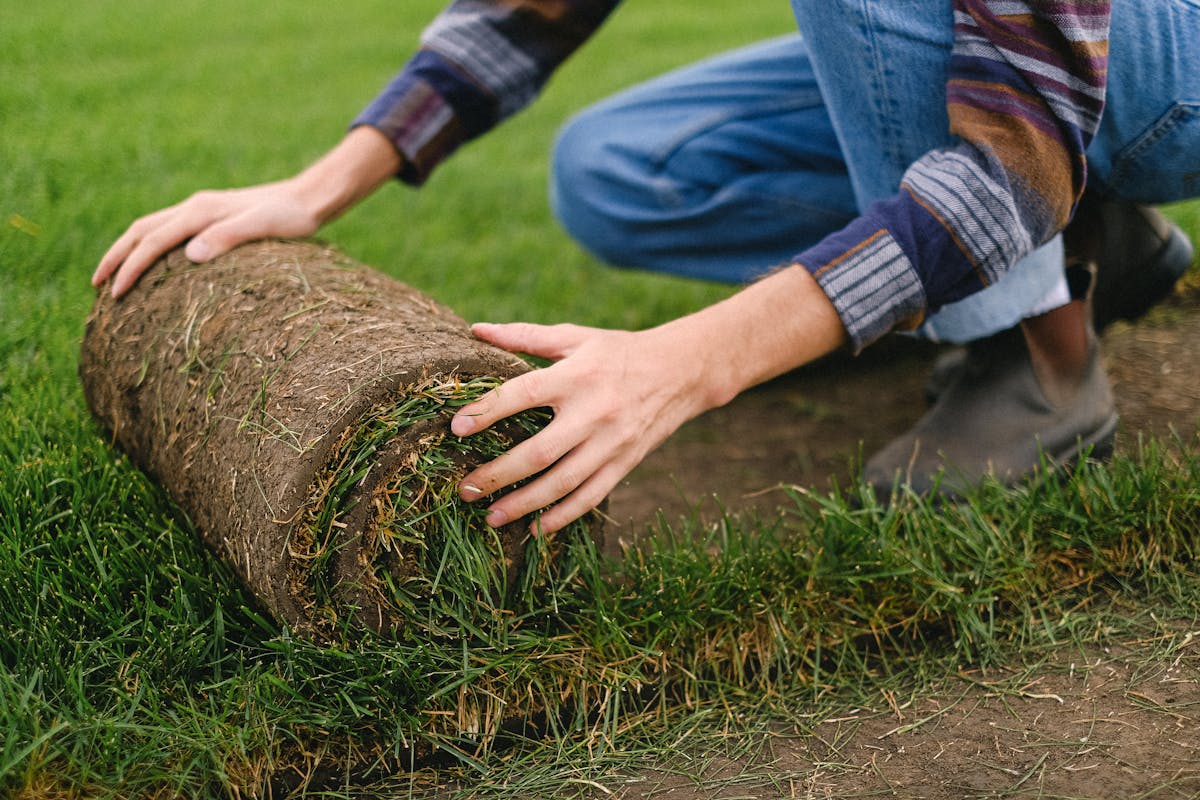
Sod gives a damaged area established turf coverage immediately instead of waiting for surrounding grass to slowly reclaim bare soil. That makes it particularly useful when a large section of the lawn has failed or when appearance matters now rather than months from now.
It can also make matching the existing turf easier. Some popular Georgia turf varieties are established vegetatively rather than simply repaired with whatever grass seed happens to be available.
UGA Extension identifies late spring and summer as the active growth period for Georgia's warm-season grasses and notes that May through July is an especially favorable period for establishing a warm-season lawn by seed or sod.
New Sod Is Only as Good as the Ground Beneath It
Correcting soil, drainage, sunlight, or irrigation problems before installation gives new turf a much better opportunity to establish successfully.
Don't Put New Grass Over an Old Problem
Fresh sod can change the appearance of a property quickly, but sod is not a substitute for site preparation.
If the old lawn failed because water stands in the area after every heavy rain, the drainage problem still exists. If sprinklers miss one section of the yard, the new grass will eventually face the same moisture stress. And if dense shade makes the location unsuitable for the turf variety, replacing that turf without addressing the site conditions may only restart the same cycle.
Soil preparation matters as well. UGA Extension emphasizes proper root-zone preparation for successful turf establishment and recommends soil testing so pH and nutrient needs can be understood before establishment.
New Sod Needs Different Care While It Establishes
An established lawn and freshly installed sod should not be watered the same way.
Established turf generally benefits from deeper, less frequent irrigation when rainfall is insufficient. Newly installed sod needs the root zone kept adequately moist while new roots begin growing into the soil below.
This establishment period is one reason proper installation and follow-up care matter. The goal is not simply to lay green grass over brown dirt. The goal is to establish turf that becomes rooted into the property and can be maintained successfully over time.
Repair What Can Be Saved. Replace What Cannot.
There is little reason to tear out healthy turf that has a reasonable opportunity to recover. There is also little benefit in spending an entire growing season trying to coax grass back into an area where too little viable turf remains.
The better decision comes from looking at the whole situation: the amount of healthy grass remaining, turf variety, soil condition, sunlight, irrigation, drainage, and what caused the lawn to decline.
Not Sure Whether Your Lawn Needs Repair or Sod?
Risen Savior Lawn Care can help evaluate problem areas and determine whether improved lawn care, aeration, topdressing, irrigation work, targeted repair, or sod installation makes the most sense for your property.
Call (706) 449-7801 Request an EstimateLawn Repair & Sod Help Around Dearing, Georgia
Homeowners in Dearing, Thomson, Harlem, Boneville, Warrenton, Grovetown, and surrounding communities deal with many of the same lawn problems: thin turf, bare areas, compacted soil, inconsistent watering, and grass that simply does not seem to recover.
Risen Savior Lawn Care provides practical help with lawn care and landscaping services, including sod installation, lawn maintenance, irrigation, seasonal aeration, topdressing, mulching, and other services designed to improve the appearance and health of your property.
If your lawn is green but still looks sparse, you may also want to read Why Your Lawn Still Looks Thin Even Though It's Turning Green .
For smaller damaged areas, see Bare Spots After Winter: Patch Them, Repair Them, or Replace Them With Sod? .
Frequently Asked Questions About Sod & Lawn Repair
These are some of the most common questions homeowners have when deciding whether to repair an existing lawn or start fresh with sod.
Can a thin lawn fill back in without installing sod?
Sometimes. Warm-season grasses such as bermudagrass and zoysiagrass can spread during active growth. If healthy turf remains nearby and the underlying cause of thinning is corrected, natural recovery may be possible. Large completely bare areas are less likely to recover quickly without more direct repair.
How do I know when a bare area is too large to recover naturally?
There is no single size that applies to every lawn. The amount and vigor of healthy turf surrounding the area, grass species, soil condition, sunlight, moisture, and time remaining in the active growing season all affect recovery. A large area with almost no living turf generally makes sod or another establishment method more practical.
What is the best time to install warm-season sod in Georgia?
Warm-season grasses establish most aggressively while actively growing. UGA Extension identifies May through July as a particularly favorable period for establishing warm-season lawns by sod or seed, although sod can be installed outside that window with appropriate management and additional considerations.
Can I put sod directly over a bad lawn?
Proper preparation is important. Simply covering a failing lawn can leave compaction, drainage, grading, irrigation, or soil problems unresolved. Preparing the root zone and addressing the reason the previous turf struggled gives the new sod a better foundation.
Does new sod need more water than an established lawn?
Yes. Newly installed sod needs consistent moisture while roots become established in the underlying soil. Once established, irrigation can transition toward the deeper and less frequent watering practices appropriate for established turf and current weather conditions.
Can compacted soil cause a lawn to become thin?
Yes. Compaction can restrict root growth and reduce movement of air and water into the root zone. When compaction is contributing to a weak lawn, core aeration during the appropriate active-growth period may be part of the solution.
Can Risen Savior Lawn Care install sod?
Yes. Sod installation is among the lawn and landscape services offered by Risen Savior Lawn Care. Call (706) 449-7801 to discuss your property and request an estimate.
Helpful Georgia Lawn Resources
Technical lawn-care guidance referenced in this article is supported by University of Georgia Cooperative Extension turfgrass resources, including Lawns in Georgia: Selection and Species and UGA Extension guidance on warm-season lawn establishment and care.